
ISA
ISA may refer to any of the following:
1. Short for Industry Standard Architecture, ISA was introduced by IBM and headed by Mark Dean. ISA was originally an 8-bit computer bus that was later expanded to a 16-bit bus in 1984. When this bus was originally released, it was a proprietary bus, which allowed only IBM to create peripherals and the actual interface. However, in the early 1980s, other manufacturers were creating the bus.
In 1993, Intel and Microsoft introduced a PnP (plug and play) ISA bus that allowed the computer to automatically detect and set up computer ISA peripherals, such as a modem or sound card. Using the PnP technology, an end-user would be able to connect a device and not have to configure the device using jumpers or dip switches.
All modern computers no longer have ISA slots and instead utilize PCI (peripheral component interconnect) slots. Below is an example of an ISA SCSI (small computer system interface) expansion card and the motherboard ISA slot.
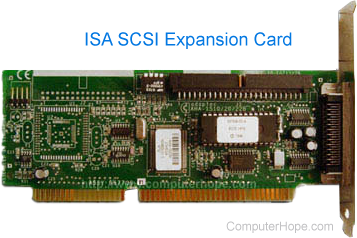
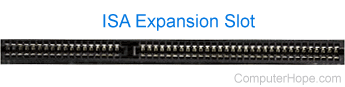
How can I add an ISA card if I don't have an ISA slot?
To connect an ISA card to a computer, the motherboard must have an ISA slot. As we previously mentioned, today's computers no longer come with ISA expansion slots, and most modern operating systems no longer support ISA. If your motherboard does not have an ISA expansion slot, we recommend getting a more modern card supported by your motherboard.
2. Short for instruction set architecture, see our instruction set definition for further information on this term.
16-bit, Bus, Computer acronyms, EISA, Expansion slot, Hardware terms, MCA, Motherboard terms